

WHY CHOOSE NEOSLEGAL
Why Founders and Institutions Choose NeosLegal
NeosLegal has worked only on crypto and Web3 since 2016, before VARA existed, before ADGM had a crypto framework, and before most UAE firms understood what Bitcoin was. That head start shows in the track record, the recognition, and the way engagements run.
Track Record
- 350+ UAE Web3 and crypto projects structured and 750+ founders advised since 2016, with zero client enforcement actions in ten years.
- USD 500 billion in transactions advised and deals closed.
- 20+ VASP licence applications advised across the UAE regulators.
- 250+ Tier-1 exchange legal opinions at a 100% acceptance rate, a commercially verifiable outcome across hundreds of submissions.
Independent Recognition
- Best UAE Crypto Law Firm 2026, UAE Business Awards Middle East.
- Middle East Technology Legal Team of the Year, The Oath Middle East, November 2025.
- Authors the UAE chapters of the Chambers Blockchain and Crypto Assets guide, 2025 and 2026.
- Irina Heaver ranked as Recommended Blockchain Lawyer in the UAE 2025 and 2026, Lexology.
Regulatory Coverage
- All five UAE regulatory pathways, VARA, ADGM (FSRA), DIFC (DFSA), the federal CMA and CBUAE, handled within a single firm, with no coordination overhead between separate advisers.
- 60+ jurisdictions covered in total for cross-border structuring since 2016.
- Federal CMA Category RWA Tokenization Exchange, broker-dealer and OTC dealing desk licences delivered end to end, including the full policy suite, AML risk and controls register, and Approved Persons submissions the regulator requires.
Every engagement is fixed-fee with defined milestones confirmed before work begins. Direct access to Irina Heaver and senior associates throughout, not associates managing the relationship.
What founders need to know
Key Takeaways
- ADGM is the Abu Dhabi financial free zone, established under Federal Decree No. 15 of 2013, operating under English common law with its own courts, and regulated by the FSRA.
- ADGM has regulated virtual assets since 2018, earlier than most jurisdictions, under the Financial Services and Markets Regulations 2015 and its Virtual Asset Framework.
- Only Accepted Virtual Assets may be used in ADGM. Privacy tokens and algorithmic stablecoins are prohibited.
- The June 2025 amendments moved several approvals from a prior-approval basis to a notification and self-assessment basis, added a product-intervention power, expanded venture capital fund scope, and added virtual-asset lending, borrowing, and staking.
- The minimum capital for virtual-asset custodians was raised to AED 5 million, and a Fiat-Referenced Token regime took effect on 1 January 2026.
- ADGM and VARA are different regulators with different bases. ADGM suits institution-facing, fund, and asset-management structures under common law, and the choice between them should be made before incorporation.
“ADGM and VARA are not interchangeable. ADGM is a common-law financial services regulator that institutions read instantly, and it suits funds and asset managers. VARA is the Dubai virtual-asset authority. Choosing the wrong one before you incorporate is the expensive mistake.”

Introduction
Abu Dhabi Global Market was one of the first financial centres in the world to build a dedicated virtual-asset framework, and it did so on an English common-law foundation that international institutions already understand. For an institution-facing crypto business, a fund, or an asset manager, that combination is the draw: a familiar legal system, its own courts, and a regulator, the FSRA, that has supervised virtual assets since 2018. The framework keeps moving, with a significant set of amendments in 2025, so the current position is what matters.
This page explains what an ADGM crypto lawyer does, how the FSRA virtual-asset framework works, the regulated activities and capital, the application stages, and how ADGM compares with VARA. NeosLegal has structured crypto businesses, funds, and managers in ADGM since 2016. ADGM publishes its own materials at adgm.com.
What an ADGM Crypto Lawyer Does
This is regulatory and structuring work under the FSRA framework. The specific deliverables you should expect:
Regulator fit and entity structure
Confirm ADGM is the right regulator for your business, and structure the ADGM entity to fit the activity.
Regulated activities and permission
Identify the regulated activities you will conduct and the financial services permission you need from the FSRA.
The application and FSRA engagement
Prepare and submit the application, including the regulatory business plan, and manage FSRA engagement through to authorisation.
AML, CFT, governance and compliance
Draft the AML and CFT framework, governance, risk, and compliance manuals to the FSRA standard.
Fit-and-proper files
Prepare fit-and-proper files for key personnel and the controllers of the business.
Accepted assets, custody and capital
Advise on the accepted-asset position, custody, capital, and, where relevant, the Fiat-Referenced Token regime.
Life after authorisation
Advise on ongoing obligations after authorisation, including reporting, notifications, and supervision.
We work with exchanges, custodians, brokers, fund managers, and token businesses choosing Abu Dhabi as their base.
The ADGM and FSRA Virtual Asset Framework
The full application spec, capital bands and timelines sit on the ADGM crypto licence service page .
ADGM regulates virtual assets through the FSRA under the Financial Services and Markets Regulations 2015 and a dedicated Virtual Asset Framework that has been in place since 2018. The framework treats virtual-asset activities as financial services, which is why the entry point is a financial services permission rather than a standalone virtual-asset licence. A defining feature is that only Accepted Virtual Assets may be used: the FSRA assesses tokens against its criteria, and assets that do not qualify, including privacy tokens and algorithmic stablecoins, are not permitted. The 2025 amendments reshaped parts of the framework, moving several approvals from a prior-approval basis to a notification and self-assessment basis, introducing a product-intervention power for the regulator, expanding the scope for venture capital funds, and adding virtual-asset lending, borrowing, and staking as activities the framework addresses. The result is a framework that is both well-established and recently modernised, which is a strong position for an applicant but one that has to be read as it stands today.
ADGM Regulated Activities and Capital
For which firms currently hold FSRA permissions, see the live UAE VASP Licence Tracker .
What you can do in ADGM, and what it costs to stand up, depends on the activities you are authorised for. Operating an exchange, providing custody, dealing or arranging deals, managing assets, and advising are distinct regulated activities, each with its own conditions. Custody carries particular weight: the minimum capital for a virtual-asset custodian was raised to AED 5 million, reflecting the risk of holding client assets. The 2025 amendments added virtual-asset lending, borrowing, and staking to the activities the framework contemplates, widening what an authorised firm can offer. Separately, a Fiat-Referenced Token regime took effect on 1 January 2026, governing fiat-referenced stablecoins within ADGM. The capital, the systems, and the governance the FSRA expects scale with the activities you choose, so the activity set is the first thing to define, because it drives the cost and the timeline of everything that follows.
The ADGM Application, Stage by Stage
An FSRA application runs through recognisable stages.
- 01
Pre-application engagement
It begins with pre-application engagement, where the business model, the activities, and the proposed structure are discussed with the regulator before anything is filed.
- 02
The formal application
The formal application follows, built around a regulatory business plan and the full suite of compliance, AML, risk, and governance documentation, together with fit-and-proper files for the key individuals.
- 03
FSRA assessment and questions
The FSRA assesses the application and engages with questions, which is where the quality and internal consistency of the documents determine how smoothly the process runs.
- 04
Approval in principle
Where the regulator is satisfied, it grants approval in principle, setting the conditions to be met before authorisation.
- 05
Permission granted, then supervision
Once those conditions are met, the financial services permission is granted, and the firm moves into the post-authorisation phase of ongoing supervision, reporting, and notifications.
The stage that decides the timeline is the application itself, because a complete, consistent submission is what avoids rounds of deficiency questions.
ADGM versus VARA: Which Abu Dhabi or Dubai Route Fits?
ADGM and VARA are different regulators with different foundations, and the choice is not about prestige, it is about fit.
-
ADGM
- ADGM is a financial free zone operating under English common law, with the FSRA regulating virtual assets as financial services, which institutions, funds, and asset managers tend to prefer because the legal system and the regulatory model are globally familiar.
-
VARA
- VARA is the Virtual Assets Regulatory Authority for Dubai outside the DIFC, a dedicated virtual-asset regulator under Dubai Law No. 4 of 2022, which suits exchanges, brokers, custodians, and token and tokenization projects oriented to the Dubai market.


Some businesses are clearly one or the other, and some run more than one structure. What matters is that the decision is made before entity formation, because moving between the two after incorporation costs months and capital. We compare both against your activity, your clients, and your capital before recommending a route.
Who Needs an ADGM Crypto Lawyer, and Who Does Not
Who needs one
You need an ADGM crypto lawyer if you plan to base a virtual-asset business in Abu Dhabi Global Market, set up a fund or asset manager holding digital assets in ADGM, or seek an FSRA financial services permission for any virtual-asset activity. You also need one if you are weighing ADGM against VARA, because the choice has to be made before you incorporate.
Who does not, yet
You probably do not need one yet if you have no UAE nexus and no plan to operate from Abu Dhabi, or if you are an individual investing your own capital. A scoping call will confirm whether ADGM is the right home, which activities and permission you need, and what the structure should look like.
What Does ADGM Crypto Licensing Cost?
Legal fees depend on the activities, the permission sought, the entity structure, and how much documentation must be drafted from scratch. For a single-activity FSRA permission with a standard structure, legal fees commonly range from USD 20,000. Custody, multi-activity permissions, fund managers, and Fiat-Referenced Token structures sit at the higher end. Regulator fees, the capital requirement, and substance costs are separate, and custody carries a minimum capital of AED 5 million. NeosLegal provides a clear fee estimate after the initial strategy call, once scope is defined.
Cost ranges are indicative, reviewed periodically, and confirmed in writing after scoping. They are not a quote.
Why a Crypto-Native Firm, Not a General Commercial Firm
A general commercial firm can file an FSRA application. The harder knowledge is knowing how the FSRA reads a virtual-asset business in practice, which assets it will accept, how the 2025 amendments change the path, and which documents trigger questions. A generalist learns this on your matter and your timeline. A crypto-native firm that has structured businesses, funds, and managers in ADGM since 2016 has already made those calls. You also get no hand-offs, with direct access to Irina Heaver and senior associates throughout.
“The FSRA is a sophisticated regulator and it can tell within minutes whether an application was written by people who understand virtual assets or by people reading the rules for the first time. That difference is the whole timeline.”
Track record
Representative Matters
-

VASP Licensing & Regulatory
Institutional Custodian – ADGM/FSRA
Advised an institutional digital-asset custodian on ADGM/FSRA licensing, capital-adequacy treatment and operational manuals, clearing the path for compliant onboarding of high-value clients and cross-border custody from the UAE.
-

VC Funds
ADGM Fund Manager Licence
Advised a digital-asset fund manager on securing an ADGM fund-manager licence, preparing the full application, governance structures and investor-offering materials to FSRA standards.
-
Market Entry & Advisory
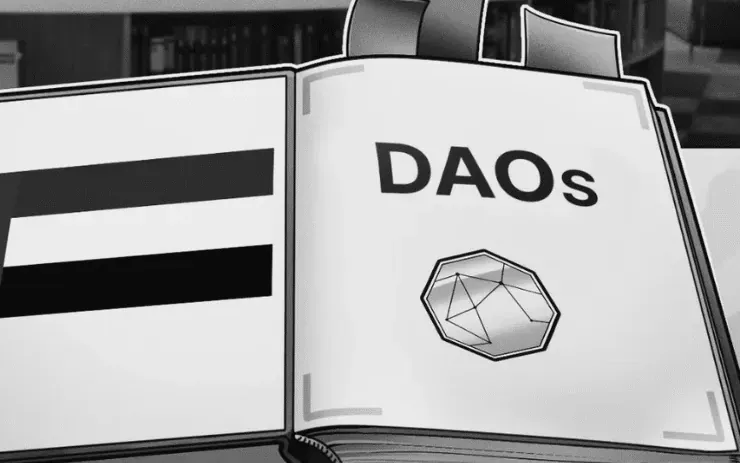
DAO Structuring for the #1 DEX
Advised the world's #1 decentralized exchange on UAE DAO structuring, weighing ADGM foundations against the RAK DAO regime to optimize governance, liability protection and regulatory alignment.
-

ADGM Licensing
ADGM/FSRA Application for a Digital-Asset Exchange
Advised an operator on an ADGM/FSRA licence for a multilateral trading facility, preparing the regulatory business plan and governance framework.
Browse 100+ Representative Case Studies
View All Case StudiesRelated Services
An ADGM mandate rarely sits in one box. For licensing across all five regulators, see our UAE VASP licensing guide . For the Dubai route, see our VARA licensing lawyer page . If you are raising a fund in ADGM, read our crypto fund lawyer page, issuing a token, our token launch lawyer page, tokenizing assets, our RWA tokenization lawyer page, or building DeFi, our DeFi lawyer page. For the general overview, see our crypto lawyer in Dubai and UAE page .